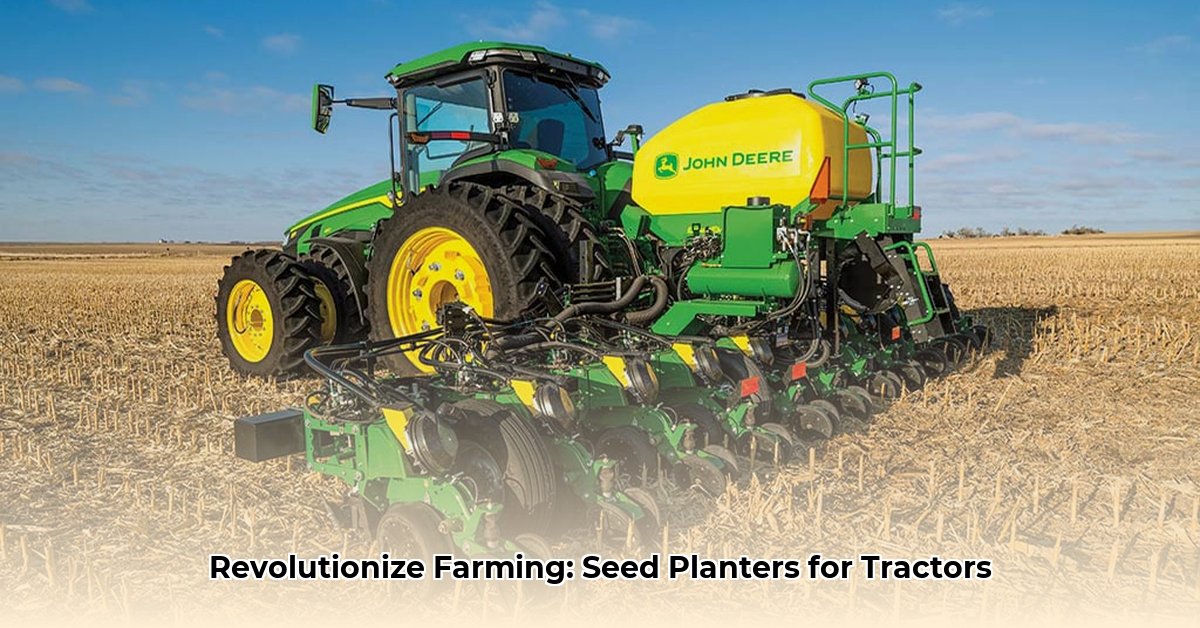
Farming faces a critical challenge: feeding a growing global population while minimizing environmental impact. Precision planting, utilizing advanced seed planters for tractors, offers a powerful solution. These machines enhance efficiency, reduce waste, and ultimately boost yields, creating a more sustainable and profitable agricultural future. This guide explores the various types of seed planters, delves into their inner workings, and provides practical instructions for optimal use. For more information on tractor planters, check out this helpful resource: Tractor Planters.
Types of Seed Planters for Tractors
Choosing the right seed planter is crucial for maximizing efficiency and minimizing environmental impact. Several types cater to different needs and budgets. Consider your farm size, budget, and crop type when making your decision. A smaller farm might benefit from a basic planter, while larger operations may require the advanced precision of a GPS-guided or variable-rate system.
Basic Planters: Simple, affordable, and easy to maintain. Ideal for smaller farms or those starting out. These planters provide a reliable, albeit less precise, planting method.
- Pros: Low cost, easy maintenance.
- Cons: Less precise seed placement, potentially lower efficiency in large fields.
GPS-Guided Planters: Utilize GPS technology for precise seed placement, minimizing overlaps and gaps. This leads to reduced seed waste and more consistent planting depth and spacing.
- Pros: Improved accuracy, reduced seed waste, consistent planting.
- Cons: Higher upfront cost, reliance on a strong GPS signal.
Variable-Rate Planters: These "smart" planters use sensors and real-time data to adjust planting density based on field conditions. This optimizes resource use, maximizing yield potential.
- Pros: Optimized seed placement, efficient resource use, higher yields.
- Cons: Higher cost, complex setup, requires specialized knowledge.
Autonomous Planters: These self-driving planters represent the cutting edge, offering ultimate precision and efficiency. However, they are costly and require significant expertise.
- Pros: Ultimate precision, reduced labor costs.
- Cons: Very high cost, advanced technical expertise needed.
| Planter Type | Cost | Precision | Efficiency | Complexity | Maintenance |
|---|---|---|---|---|---|
| Basic | Low | Low | Low | Low | Low |
| GPS-Guided | Medium | Medium-High | Medium-High | Medium | Medium |
| Variable-Rate | High | High | High | High | Medium-High |
| Autonomous | Very High | Very High | Very High | Very High | Very High |
(Note: Cost and complexity are relative and vary based on specific models and manufacturers.)
A Technical Deep Dive: How Precision Seed Planters Work
Precision planting relies on several key technologies working in concert. Understanding these components is essential for maximizing their efficiency and benefits.
GPS Guidance: GPS receivers act as the planter's "eyes," guiding the tractor along pre-planned routes with centimeter accuracy. This ensures consistent seed spacing and depth, minimizing overlaps and gaps. Think of it as a high-tech autopilot for your planter.
Variable-Rate Technology (VRT): Sensors collect real-time data on soil conditions, moisture levels, and other factors. This information allows the planter to adjust seed density and fertilizer application, optimizing resource use and maximizing yields. It's like providing each seed with a customized nutrient plan.
Advanced Seed Metering Systems: These systems ensure the precise delivery of seeds at the correct rate, consistently throughout the field. Different mechanisms, such as vacuum, air pressure, or mechanical systems, achieve this precision. This eliminates wasted seeds and ensures uniform plant spacing.
Practical Application & Instruction: Selecting and Utilizing Your Seed Planter
Choosing the right seed planter requires careful consideration of your specific needs and resources.
Assess Your Farm: Evaluate your farm size, crop type(s), budget, and available labor. This will guide your planter selection.
Select the Right Planter: Consider the pros and cons of each type, aligning your choice with your assessed needs. The initial investment might seem daunting, but the long-term benefits often outweigh the upfront costs.
Calibration: Accurate calibration is crucial for precise seed spacing and depth. Always follow the manufacturer's instructions with precision. Improper calibration can lead to uneven planting and yield reductions.
Maintenance: Regular maintenance, including cleaning, lubrication, and component checks, is essential for planter longevity and performance. Proper maintenance minimizes downtime and ensures optimal operation.
Troubleshooting: Familiarize yourself with common issues (e.g., seed blockages, inconsistent planting depth) and their solutions. Refer to your owner’s manual or consult your equipment dealer for assistance.
Sustainability & Economic Impact: The Long-Term View
Precision planting significantly reduces environmental impact. By minimizing seed waste, optimizing fertilizer and water use, and promoting healthier crop growth, it contributes to sustainable farming practices. This translates to long-term economic benefits, including reduced input costs, increased yields, and improved resource efficiency. While the initial investment can be substantial, the long-term ROI often justifies the cost. Research available grants and financing options to ease the financial burden.
Conclusion: Embracing a Sustainable Future
Precision planting technology is revolutionizing agriculture, offering a pathway towards sustainable and profitable farming. By adopting these advanced seed planters, farmers can improve efficiency, reduce waste, protect the environment, and boost their bottom line. Explore resources, consult experts, and consider the long-term benefits to make informed decisions about integrating this crucial technology into your operations. The future of farming is precision, and the time to invest is now.